

Supriyo Naskar

Designing future materials for a sustainable world, atom by atom, with simulation and machine learning.

Portrait of Supriyo Naskar

About me

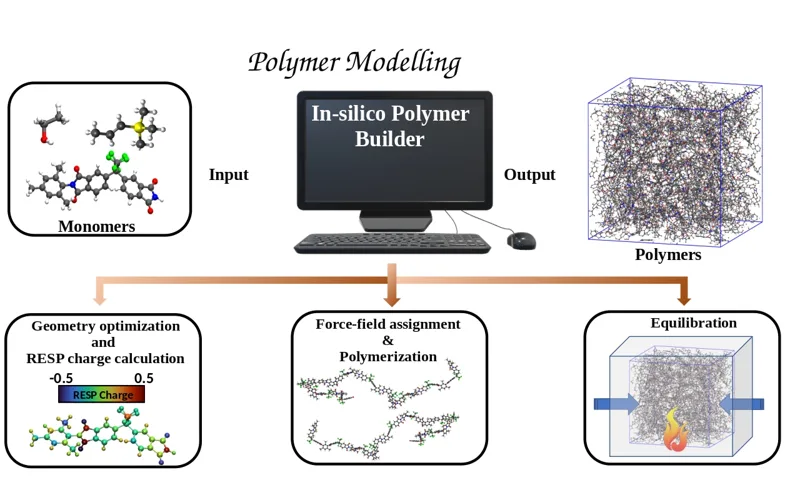
I'm a computational materials scientist. I use AI, machine learning and multiscale simulation to understand why materials behave the way they do, and to find better ones.

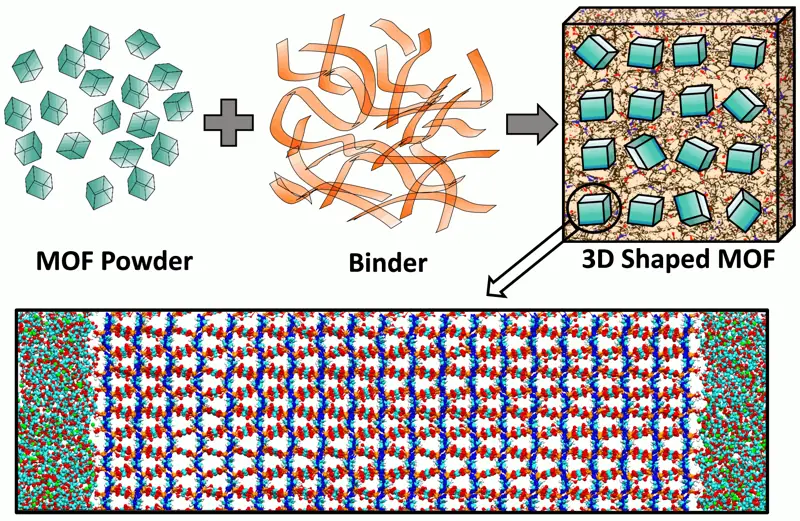
Over ten years at IISc Bangalore, CNRS Montpellier and the Max Planck Institute for Polymer Research, I've worked on MOFs for CO₂ capture, membranes for gas separation and desalination, and soft matter from DNA nanostructures to protein condensates.

I enjoy working closely with experimental groups and industry, turning simulation results into clear answers about which material to make, test or scale up.

Path so far

  1. 2023–present

    Max Planck Institute for Polymer Research, Mainz

    Postdoctoral Scientist

  2. 2022–2023

    CNRS / ICGM, Montpellier

    Postdoctoral Scientist

  3. 2016–2021

    Indian Institute of Science, Bangalore

    Ph.D. Physics

  4. 2014–2016

    IIT Bombay

    M.Sc. Physics

  5. 2011–2014

    Presidency University, Kolkata

    B.Sc. Physics (with Mathematics, Chemistry)

Research

From atoms to better materials

AI, machine learning and multiscale simulation

Explore research

Publications

Latest papers

Papers
20
Citations
550+
h-index
13
All publications
Preview figure for “Intrinsic Pore Architecture of a Two-Dimensional MOF: A Blueprint for Overcoming the Permeability-Selectivity Trade-Off in Desalination”

Intrinsic Pore Architecture of a Two-Dimensional MOF: A Blueprint for Overcoming the Permeability-Selectivity Trade-Off in Desalination

D. Fan, K. Zheng, S. Naskar, G. Maurin

Chemistry of Materials·2025

Membranes
Abstract

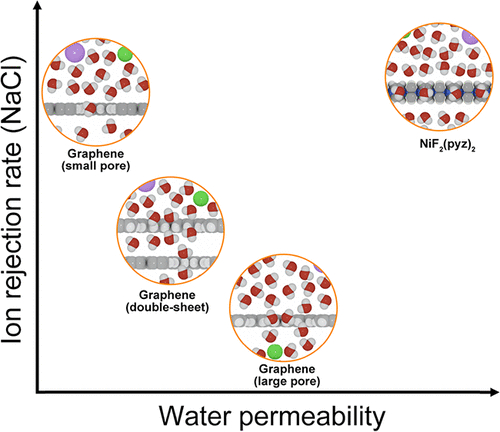
Water scarcity remains one of the most pressing global challenges, driving the urgent need for next-generation desalination technologies that can overcome the long-standing trade-off between water permeability and ion selectivity. Here, we introduce a molecular design blueprint based on a two-dimensional metal−organic framework (2D-MOF) monolayer, NiF2(pyz)2, featuring intrinsically aligned ∼4 Å pores and high structural regularity. Using systematic all-atom molecular dynamics simulations, we demonstrate that this monolayer achieves ultrahigh water permeability while maintaining 100% Na+/Cl− rejection across a wide range of applied pressures. We attribute this exceptional performance to a synergistic combination of low interfacial water density, reduced free energy barriers for water transport, and a high pore area-to-surface area ratio, captured by a proposed dimensionless descriptor. Compared to conventional 2D membranes with artificial nanopores, which often suffer from fabrication complexity, pore size variability, and mechanical fragility, the NiF2(pyz)2 monolayer offers a robust alternative with precisely defined nanochannels combined with mechanical and hydrothermal stability. This work pushes the boundaries of the structure−function paradigm in membrane science by establishing that atomically engineered intrinsic porosity, rather than postfabricated artificial channels, is the key to achieving fast and selective water transport. Our findings lay the groundwork for the rational design of high-efficiency desalination membranes and suggest possible approaches for using MOFs in sustainable water purification technologies.

Preview figure for “SUMO paralogues differentially affect phase separation and aggregation of intrinsically disordered proteins”

SUMO paralogues differentially affect phase separation and aggregation of intrinsically disordered proteins

P. Schonberger, S. Naskar, O. Ordowski, … et al. (show all 12 authors)

P. Schonberger, S. Naskar, O. Ordowski, J. Vollrath, J.-X. Chen, M. M. Möckel, M. Gelléri, C. Renz, J. D. Langer, K. Kremer, O. Kukharenko, H. D. Ulrich

bioRxiv·2026 Preprint

ProteinsSoft matter
Abstract

SUMO, the small ubiquitin-like modifier, modulates interactions of folded proteins, but also affects the dynamics of biomolecular condensates. Moreover, SUMO can directly impinge on the biophysical properties of its targets, often increasing their solubility. TDP-43 is an RNA-binding protein containing an intrinsically disordered domain that participates in protein phase separation. Its aggregation, linked to neurodegenerative diseases, is counteracted by SUMOylation, but the underlying principles are poorly understood. We now reveal distinct mechanisms of how the two isoforms, SUMO1 and SUMO2, act on TDP-43. While SUMO1 inhibits phase separation by blocking TDP-43’s self-assembly site, SUMO2 enhances phase separation via proximity-induced self-interaction involving its N-terminus and promotes a liquid-like state that prevents aggregation. The latter represents a general principle by which SUMO solubilises other targets. Our findings provide insight into how SUMOylation regulates transitions between soluble, liquid-like and aggregated states.

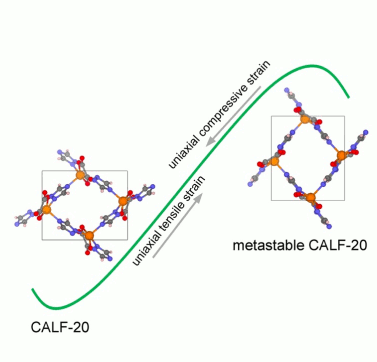
Preview figure for “Unconventional mechanical and thermal behaviors of MOF CALF-20”

Unconventional mechanical and thermal behaviors of MOF CALF-20

D. Fan, S. Naskar, G. Maurin

Nature Communications·2024

MOFs & CO₂Machine learning
Abstract

CALF-20 was recently identified as a novel benchmark sorbent for CO₂ capture at the industrial scale, however comprehensive atomistic insight into its mechanical/thermal properties under working conditions is still lacking. In this study, we developed a general-purpose machine-learned potential (MLP) for the CALF-20 MOF framework that predicts the thermodynamic and mechanical properties of the structure at finite temperatures within first-principles accuracy. Interestingly, CALF-20 was demonstrated to exhibit both negative area compression and negative thermal expansion. Most strikingly, upon application of the tensile strain along the [001] direction, CALF-20 was shown to display a distinct two-step elastic deformation behavior, unlike typical MOFs that undergo plastic deformation after elasticity. Furthermore, this MOF was shown to exhibit a spectacular fracture strain of up to 27% along the [001] direction at room temperature comparable to that of MOF glasses. These abnormal thermal and mechanical properties make CALF-20 as attractive material for flexible and stretchable electronics and sensors.

I'd be glad to talk about AI, machine-learning and multiscale models for materials.

Feel free to drop an email.